Proprioceptive Neuromuscular Facilitation (PNF) assisted stretching, post-whiplash and work-injury movement restoration, and sustainable home rehabilitation routines at Spark Medical Centre in Overport, Durban.
Assessment, Treatment & What to Expect
Select any section below to read the full clinical details.
What Is Proprioceptive Neuromuscular Facilitation (PNF) Stretching?
When a muscle has been chronically shortened by desk posture, repetitive sport, or protective guarding after an injury, passive static stretching alone often triggers the muscle's built-in stretch reflex — causing the fibres to resist lengthening. Proprioceptive Neuromuscular Facilitation (PNF) stretching is an advanced, clinically supervised flexibility technique originally developed in neuromuscular rehabilitation to safely overcome this protective reflex and restore functional range of motion.
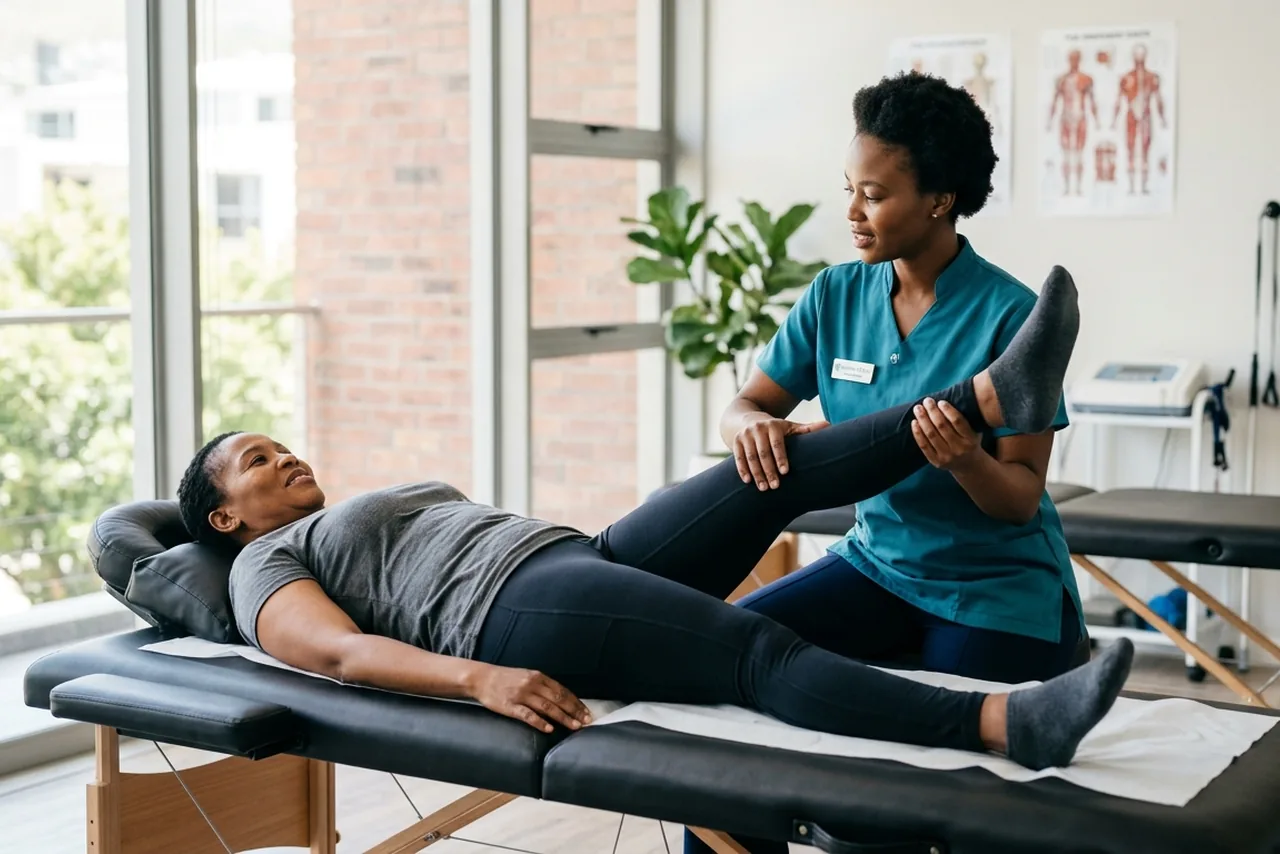
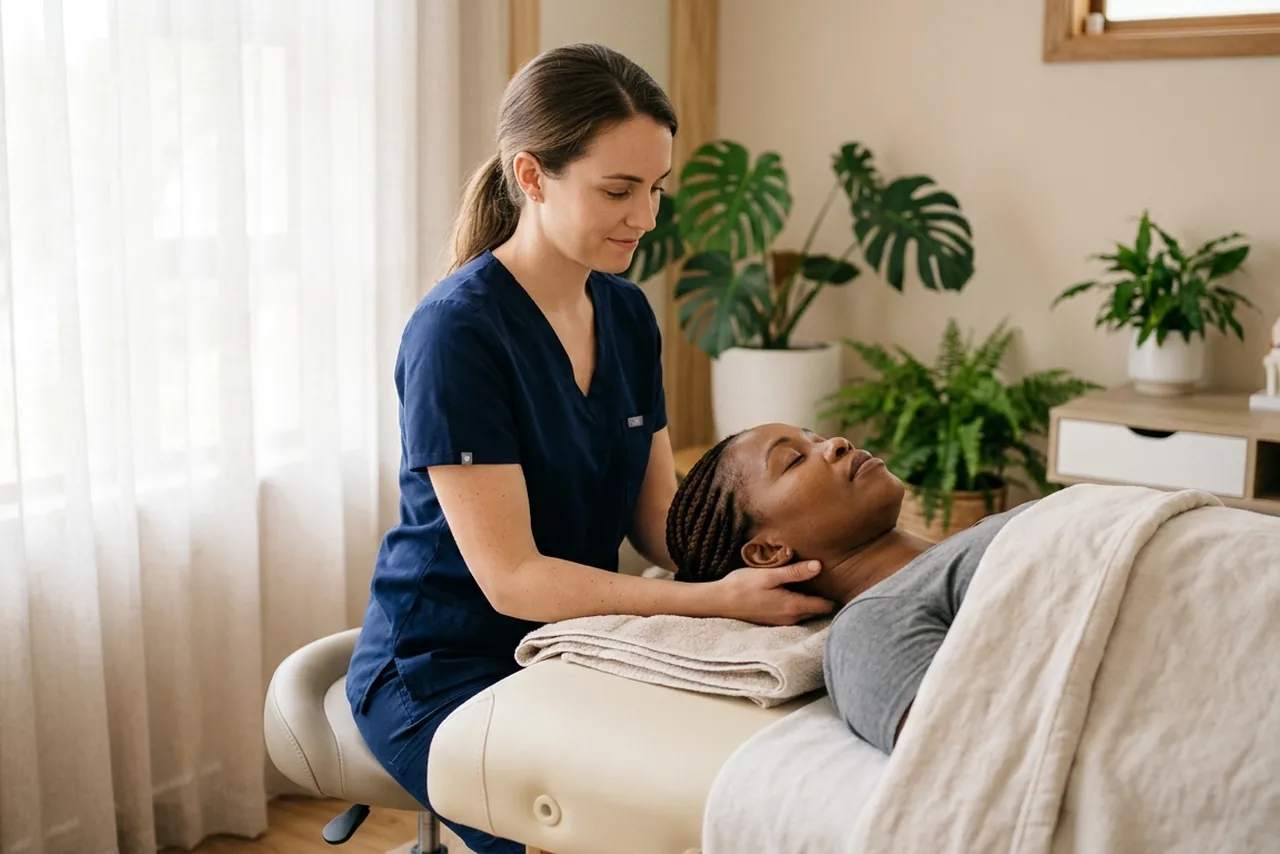
During PNF stretching with Dr Bongeka Khumalo, the target muscle group is gently guided to its comfortable end-range barrier. You are then asked to perform a brief, low-intensity isometric contraction (pushing gently against Dr Khumalo's hands for 5 to 8 seconds without moving the joint) before relaxing completely and breathing out. This contraction activates the Golgi tendon organs within the muscle-tendon junction, triggering autogenic inhibition — a neurological relaxation reflex that allows the muscle to lengthen smoothly and comfortably into a new range of motion.
- Contract-Relax and Hold-Relax PNF protocols performed one-on-one under direct practitioner control.
- Uses natural neuromuscular reflexes (autogenic and reciprocal inhibition) rather than forceful pulling.
- Immediately improves functional joint range of motion following spinal manipulation or dry needling.
Restoring Range of Motion After Whiplash, Road Accidents & Work Strains
Following a motor vehicle collision (whiplash-associated disorder), a slip-and-fall, or a workplace lifting strain, muscles across the neck, shoulder girdle, and lower back frequently develop persistent protective guarding and fear-avoidance stiffness long after the initial soft-tissue sprain has healed. Left unaddressed, this restricted mobility places abnormal stress on adjacent spinal joints and causes recurring pain flare-ups.
Dr Khumalo combines gentle segmental mobilisation and myofascial release with graded PNF stretching to progressively restore cervical rotation, lateral flexion, shoulder elevation, and lumbar flexion/extension. Because you actively control the gentle isometric contraction during PNF therapy, your nervous system regains confidence in moving through previously guarded ranges without pain.
- Graduated neck and shoulder girdle mobility restoration following whiplash and road-accident sprains.
- Rehabilitation of occupational lower back and shoulder strains for drivers, warehouse staff, and healthcare workers.
- Careful clinical pacing to build tissue tolerance without triggering rebound inflammation.
Correcting Muscle Imbalances Across the Neck, Shoulders, Hips & Hamstrings
Many chronic spinal complaints are driven by predictable postural muscle imbalances — often described clinically as Upper Crossed Syndrome (tight chest and upper neck muscles paired with weak deep neck flexors and mid-back stabilisers) and Lower Crossed Syndrome (tight hip flexors, hamstrings, and lumbar extensors paired with underactive gluteal and abdominal muscles). Simply adjusting the spine without lengthening the tight muscular tethers leaves the pelvis and shoulders pulled out of balance.
In our Overport rooms and satellite clinics, PNF stretching is targeted specifically to the muscle groups restricting your pelvic and spinal alignment: the iliopsoas (hip flexors), hamstrings, piriformis and deep external hip rotators, quadratus lumborum, pectoralis major and minor, upper trapezius, and levator scapulae.
- Pelvic and lower-limb PNF: Lengthening tight hamstrings, hip flexors, and piriformis muscles to relieve lumbar and sciatic strain.
- Thoracic and shoulder PNF: Opening shortened pectoral and latissimus dorsi muscles to improve upright posture and overhead reach.
- Cervical PNF: Gently restoring symmetrical neck rotation and side-bending for drivers and desk workers.
Sustainable Home Mobility Routines to Prevent Symptom Recurrence
What you do between chiropractic appointments is just as important as the hands-on treatment you receive in our consulting room. However, patients rarely stick to complicated, 45-minute exercise sheets. Dr Khumalo prescribes concise, realistic home mobility and postural strengthening routines — typically 3 to 4 targeted exercises taking less than 10 minutes a day — that fit easily into your morning or evening schedule.
Each exercise is demonstrated in the consultation room so you can practise the exact breathing, posture, and tension level before doing it at home, empowering you to manage stiffness early and maintain long-term spinal resilience.
- 3 to 4 practical daily mobility and stability drills tailored to your specific work and home environment.
- In-room coaching to ensure safe spinal alignment and breathing technique during every stretch.
- Progressive updates to your exercise routine as your pain subsides and strength improves.
Ready when you are.
Contracted to most South African medical aids, with cash consultations also welcome.
Patients often ask
Why does PNF stretching work faster than regular stretching on my own?
When you stretch passively on your own, your muscle spindles often sense the stretch and tighten up to protect the muscle. By performing a brief 6-second gentle push against the chiropractor's hands first, PNF triggers a neurological reflex that tells the muscle fibres to relax, allowing a deeper, safer stretch with less discomfort.
Is PNF stretching only for athletes, or can stiff office workers and older adults benefit?
PNF stretching is suitable for almost everyone because the contraction intensity is kept very light (around 20% to 30% of your effort). It is especially helpful for desk workers with tight hips and shoulders, as well as older adults wanting to maintain comfortable walking and reaching mobility.
Will I be given exercises to do at home after my appointment?
Yes. Dr Khumalo demonstrates a short, practical set of home mobility and postural exercises tailored to your condition so you can maintain the flexibility gained during your consultation.
Related care
Sports injuries, shoulders & knees
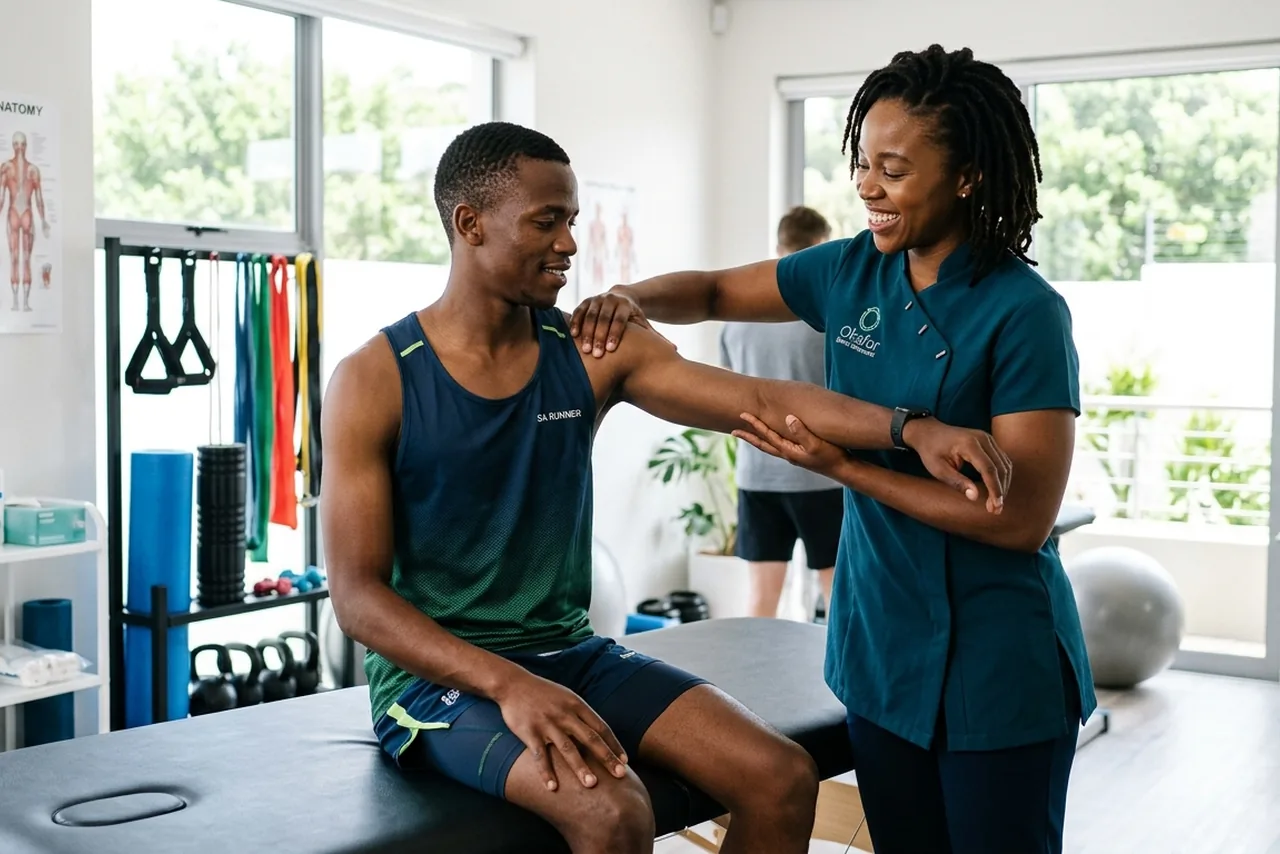
Shoulder impingement, knee pain, Achilles trouble, sprains and getting back to training.
Back pain, neck pain & sciatica
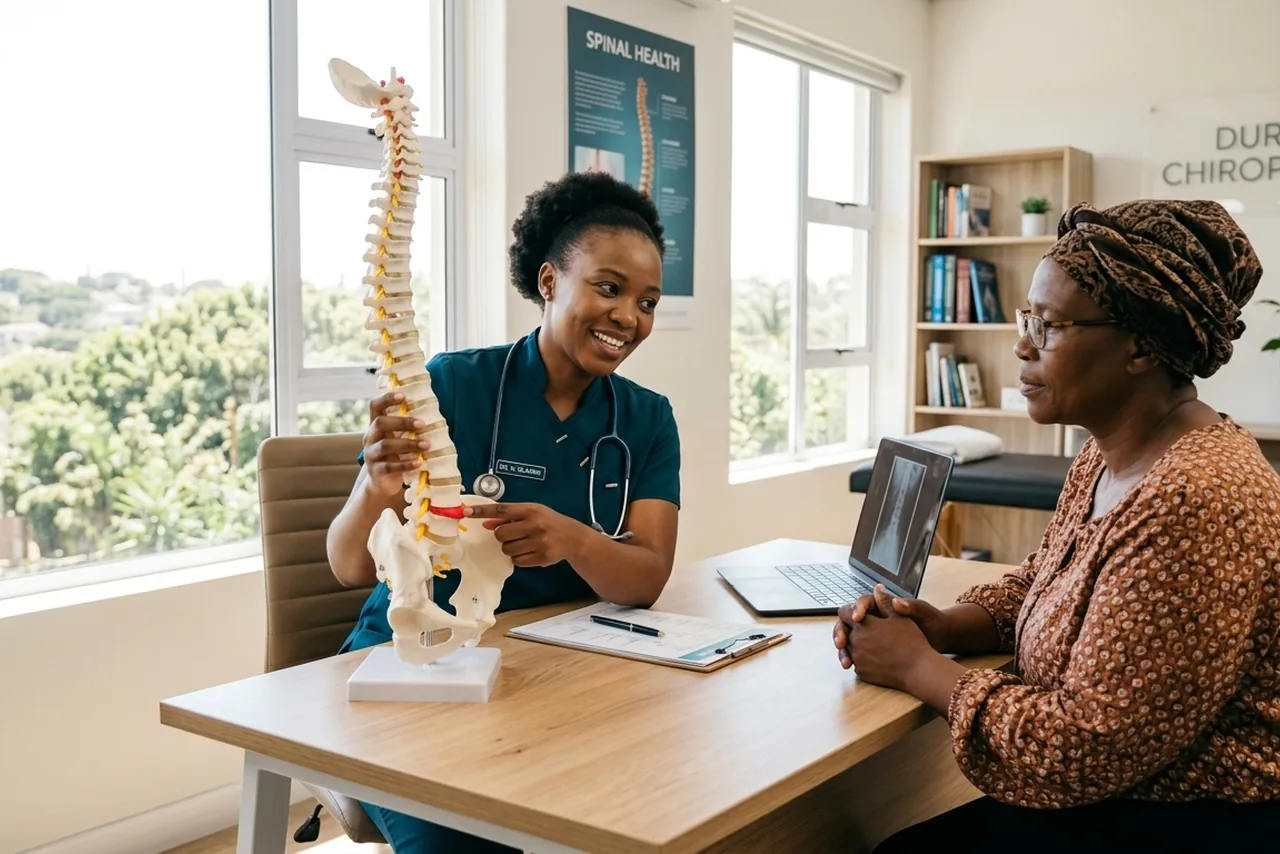
Lower back ache, a stiff neck, or pain and tingling running down an arm or leg.
Headaches, posture & jaw pain
Tension headaches, desk-bound necks and jaw clenching, eased through the upper neck and jaw.
Let’s talk about your care
Consultations take place at our main rooms at Spark Lifestyle Centre, 98 Cannon Avenue, 5th Floor Medical Suite, Overport, Durban, as well as our scheduled regional satellite clinics.
Request an appointment
Fill this in and we’ll open a ready-to-send WhatsApp message to Dr Bongeka Khumalo’s reception. We reply during consulting hours.