
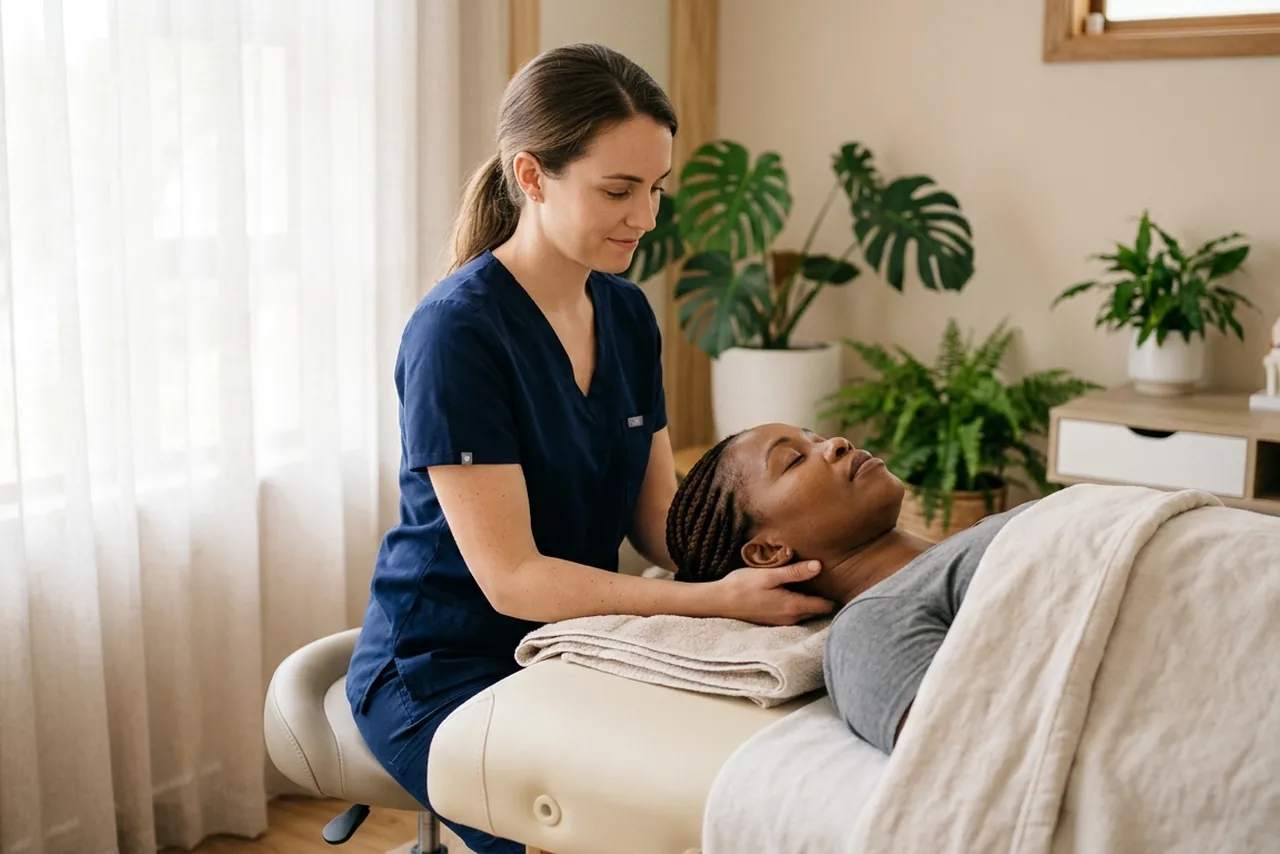
Gentle upper-cervical joint mobilisation, suboccipital myofascial release, temporomandibular joint (TMJ) therapy, and practical ergonomic rehabilitation for tension headaches, cervicogenic headaches, desk posture strain, and jaw clenching in Overport, Durban.
Assessment, Treatment & What to Expect
Select any section below to read the full clinical details.
How Upper Cervical Joint Restrictions & Suboccipital Muscles Trigger Headaches
A significant proportion of recurring headaches seen in primary musculoskeletal practice are either tension-type headaches or cervicogenic headaches — headaches that originate from mechanical dysfunction in the upper cervical spine (the C0–C1, C1–C2, and C2–C3 joints) and the surrounding suboccipital and cervical musculature. Because sensory nerve fibres from the upper three cervical spinal nerves converge with the trigeminal nerve nucleus in the brainstem (the trigeminocervical nucleus), pain signals from stiff upper neck joints and tight neck muscles are perceived by the brain as pain radiating over the back of the head, into the temple, forehead, or behind the eye.
Patients with cervicogenic or tension headaches typically notice that their headache is triggered or worsened by sustained neck postures (such as working on a laptop, studying, or long-distance driving), that pressing on the base of the skull or top of the shoulders reproduces their familiar head pain, and that neck rotation feels restricted on one or both sides.
- Cervicogenic headaches starting at the base of the skull (occiput) and radiating forward to the temple, forehead, or orbit.
- Episodic and chronic tension-type headaches presenting as a tight, pressing band across both sides of the head.
- Neck-related dizziness, visual fatigue, and suboccipital tightness aggravated by screen work.
Temporomandibular Joint (TMJ) Assessment & Masticatory Muscle Release
The Temporomandibular Joint (TMJ) — the hinge joint connecting your lower jaw (mandible) to the temporal bone of your skull just in front of the ear — works in close neuromuscular coordination with the upper cervical spine. Stress-related jaw clenching, night-time teeth grinding (bruxism), gum chewing, or asymmetrical dental bite loads can overload the TMJ articular disc and create painful trigger points in the masseter, temporalis, and pterygoid muscles.
TMJ dysfunction frequently co-exists with upper neck stiffness and temple headaches. During your consultation, Dr Bongeka Khumalo evaluates jaw opening range, mandibular deviation or clicking, and tenderness across the masticatory and cervical muscles. Treatment includes gentle myofascial release and trigger point therapy of the masseter and temporalis muscles, upper cervical mobilisation, and guided jaw-relaxation exercises, working alongside your dentist where an occlusal night-guard is indicated.
- Assessment of jaw clicking, popping, restricted mouth opening, or asymmetrical mandibular tracking.
- Targeted myofascial release of hypertonic masseter, temporalis, and upper cervical muscles.
- Relief for morning jaw ache, ear-region tension, and temple headaches linked to night-time clenching.
Addressing Forward-Head Posture & Workstation Ergonomics for Office Workers
Modern desk work and smartphone use place the head and neck under sustained mechanical leverage. For every few centimetres the head drifts forward ahead of the shoulders (anterior head carriage), the effective load placed on the cervical extensor muscles and lower cervical discs increases substantially. Over months and years, the deep cervical flexor muscles weaken, the suboccipital and pectoral muscles shorten, and the cervicothoracic junction becomes stiff and achy.
To prevent headaches and neck strain from returning days after an adjustment, Dr Khumalo combines hands-on upper cervical and thoracic mobilisation with practical ergonomic adjustments you can implement immediately at your office desk or study table — alongside simple chin-tuck (deep neck flexor activation) and scapular retraction micro-breaks.
- Mobilisation of the stiff cervicothoracic junction (base of the neck and upper back) to reduce forward-head strain.
- PNF stretching of shortened pectoralis minor, upper trapezius, and levator scapulae muscles.
- Actionable guidance on monitor height, chair lumbar support, pillow selection, and 2-minute desk reset drills.
When Headaches Require Medical or Neurological Investigation
Every patient presenting with headaches undergoes a careful clinical history and neurological screening to distinguish benign mechanical and tension headaches from primary migraines or secondary medical causes. While chiropractic care can help reduce musculoskeletal neck triggers that accompany or aggravate migraines, primary vascular or neurological disorders require appropriate medical co-management.
If you experience a sudden, severe 'thunderclap' headache, a new headache accompanied by fever, neck rigidity, visual loss, slurred speech, limb weakness, numbness, or a new-onset headache after age 50 or following head trauma, Dr Khumalo will direct you immediately for urgent medical or neurological evaluation.
- Blood pressure and cranial nerve / neurological screening performed when clinically indicated.
- Clear differentiation between mechanical cervicogenic/tension headaches and medical red-flag headaches.
- Collaborative referral to general practitioners, dentists, optometrists, or neurologists when needed.
Ready when you are.
Contracted to most South African medical aids, with cash consultations also welcome.
Patients often ask
How do I know if my headache is coming from my neck?
Neck-related (cervicogenic) headaches typically start at the base of the skull or upper neck and spread to the temple, forehead, or behind one eye. They are usually triggered by sustained neck postures or neck movement and are accompanied by restricted neck rotation and tender suboccipital muscles.
Can chiropractic care help with jaw clenching and TMJ pain?
Yes. Tight jaw muscles (the masseter and temporalis) and upper neck joint restrictions frequently feed into one another. Gentle myofascial trigger point release over the jaw and temple muscles, combined with upper cervical care and relaxation drills, helps ease TMJ tension and clicking.
Are neck adjustments for headaches gentle?
Yes. Treatment is always tailored to your comfort. Alongside or instead of gentle manual upper-cervical adjustments, Dr Khumalo uses suboccipital myofascial release, dry needling of shoulder and neck trigger points, low-force Activator impulses, and gentle mobilisation.
Related care
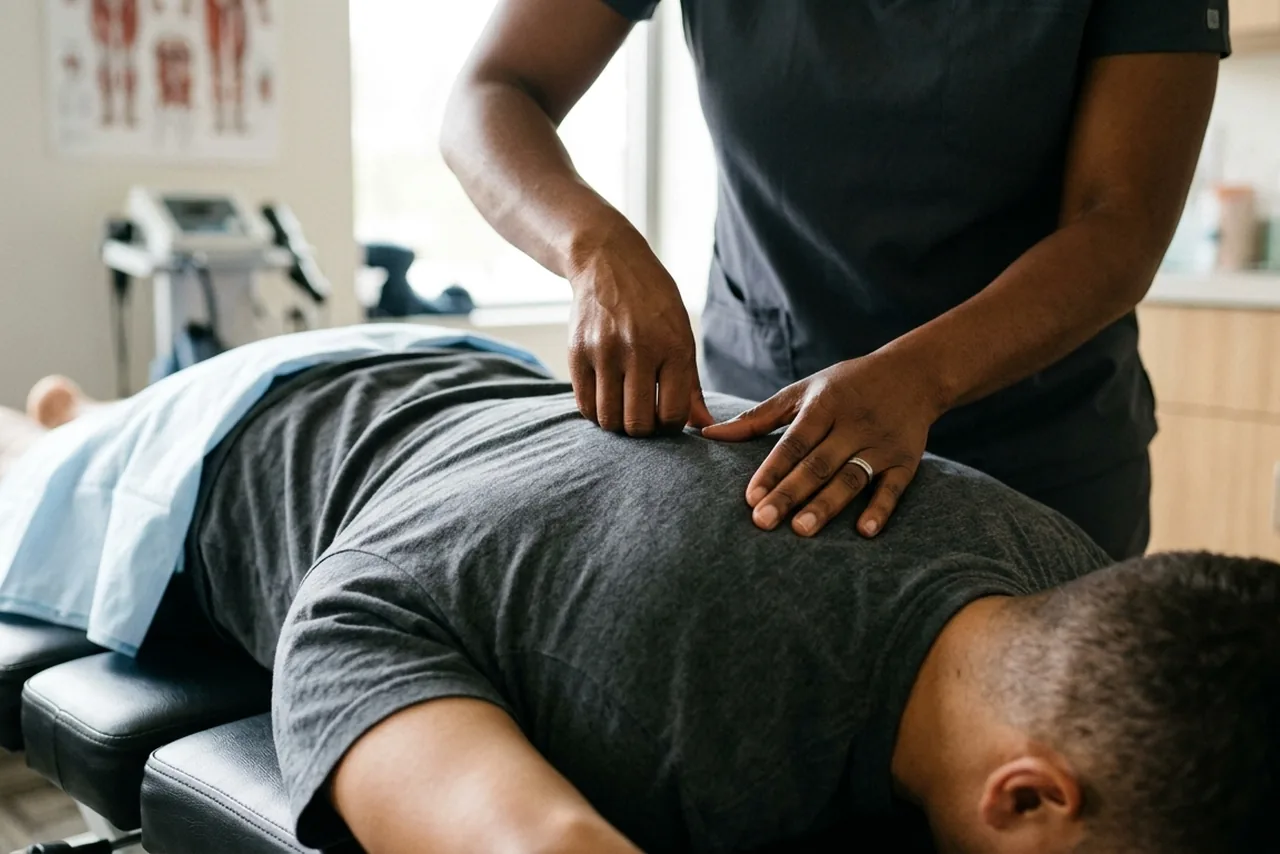
Adjustments & spinal care
For stiff, locked or painful joints in the neck, mid-back, lower back and pelvis.
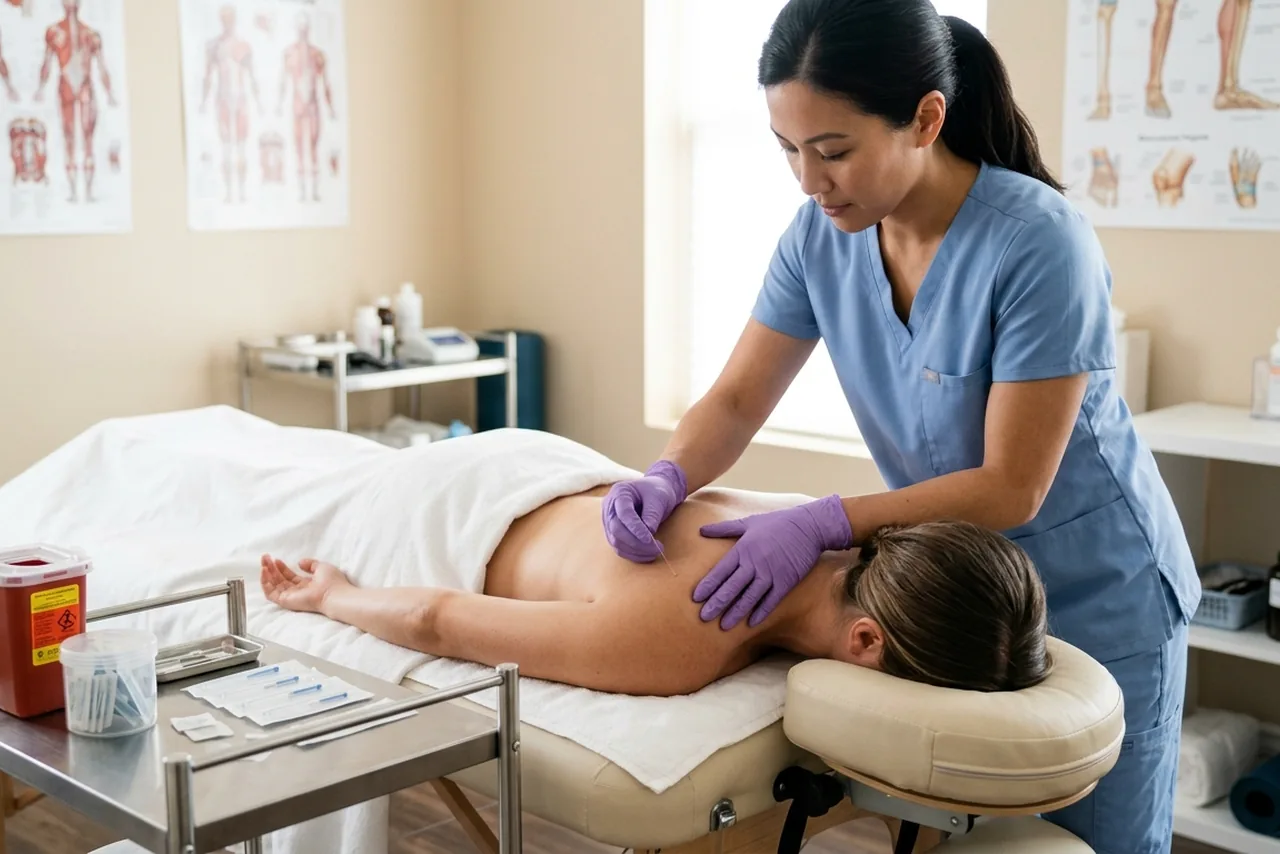
Dry needling & soft tissue work
Releases tight knots and spasm in the shoulders, back and hips when stretching alone won’t.
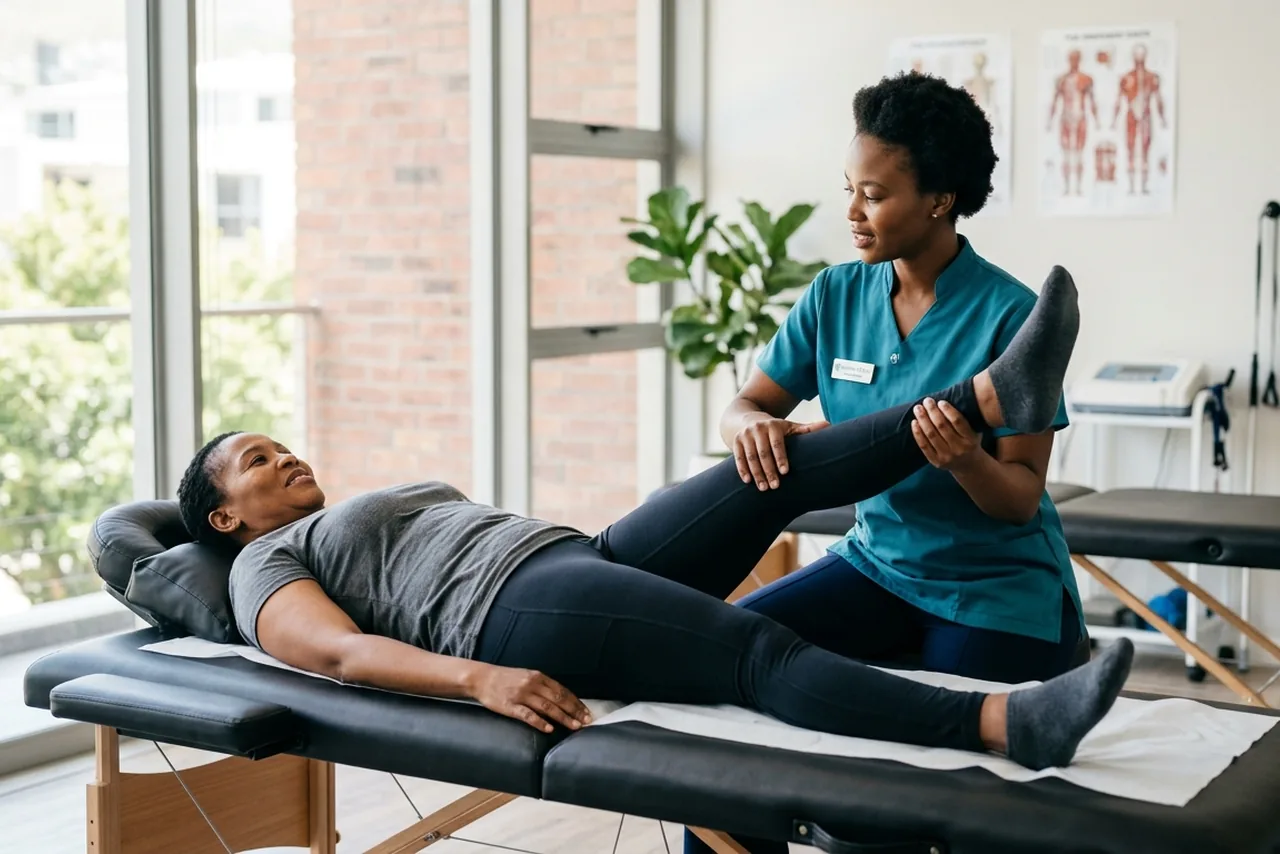
Stretching & mobility rehab
Assisted stretching and simple home exercises to keep you moving between visits.
Let’s talk about your care
Consultations take place at our main rooms at Spark Lifestyle Centre, 98 Cannon Avenue, 5th Floor Medical Suite, Overport, Durban, as well as our scheduled regional satellite clinics.
Request an appointment
Fill this in and we’ll open a ready-to-send WhatsApp message to Dr Bongeka Khumalo’s reception. We reply during consulting hours.